Is the debtor the correct legal entity?
Compare the Chinese company, contract party, invoice issuer, payee, guarantor, and any affiliate involved in performance.

Recovery and litigation assessment
Recovery strategy should start with the debtor, evidence, amount, assets, contract terms, and practical enforcement—not with a promise to sue. An assessment can identify missing proof, narrower pre-litigation options, and the factors that affect whether escalation is commercially sensible.
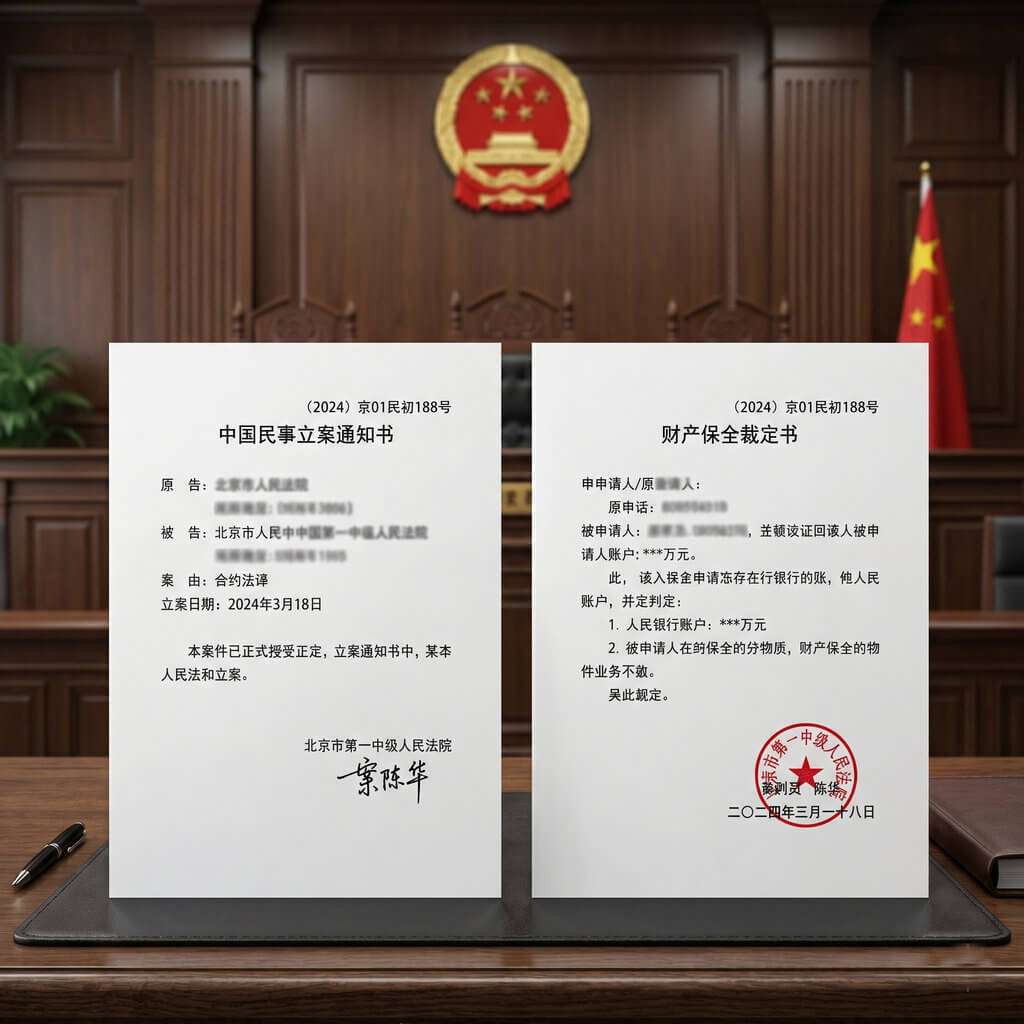
Compare the Chinese company, contract party, invoice issuer, payee, guarantor, and any affiliate involved in performance.
Build the chronology from signed terms, purchase records, payment proof, delivery evidence, acceptance or rejection, and written acknowledgements.
Available asset, operating, location, and counterparty information may affect whether a judgment or settlement path has practical value.
Translation, evidence preparation, jurisdiction, service, counsel, court, preservation, and enforcement factors all influence proportionality.
Preserve original agreements, transfers, communications, shipping or inspection records, and electronic evidence before accounts or messages disappear.
Confirm the legal debtor and review governing-law, jurisdiction, arbitration, notice, and dispute-resolution clauses.
A structured demand or negotiation may be appropriate before formal proceedings, depending on limitation periods and urgency.
Review counsel requirements, evidence gaps, cost drivers, timing uncertainty, and enforceability before authorizing escalation.
Work layer: Public scope explanation Confirmed on this page: Questions, documents, workflow, limits, and an inquiry route Confirmed only after assessment: Specific professional engagement, fee, timing, and responsible people
Work layer: Starts with client and public material Confirmed on this page: Facts to verify and gaps to resolve Confirmed only after assessment: Admissibility, translation, notarization, or specialist opinion for a formal procedure
Work layer: No outcome guarantee Confirmed on this page: A framework for the next assessment Confirmed only after assessment: Payment, settlement, victory, enforcement, compliance, or closing result
These scenarios explain the assessment method; they are not client cases, outcome claims, or legal conclusions.
Review contract cancellation rights, payment trail, admissions, and the identity of the recipient before selecting demand or formal recovery work.
Separate product-quality proof, notice compliance, inspection records, and the agreed remedy. The existence and amount of debt may itself be contested.
Confirm sales records, acceptance, credit terms, set-off allegations, and debtor assets. A clear invoice alone may not resolve every defense.
No. Outcomes depend on evidence, debtor assets, procedure, defenses, timing, and enforcement.
Often it is worth assessing, but urgency, limitation periods, asset risk, and contract terms may change the sequence.
Signed terms, invoices, payment proof, delivery and inspection records, admissions, notices, and a reliable chronology are usually central.
No fixed fee is promised here. Cost depends on evidence volume, amount, forum, service, counsel, court steps, preservation, and enforcement scope.
It may be relevant, but language, governing law, execution, authenticity, and translation requirements must be reviewed for the intended procedure.
That affects commercial viability. Additional asset and entity work may be needed, and a legal win may still be difficult to enforce.
Submit the entity, documents, amount, chronology, and decision you need to make. Facts, scope, and applicable requirements must be reviewed before any professional engagement, fee, or timing is confirmed.
Send an inquiry